
Last updated October 31, 2026
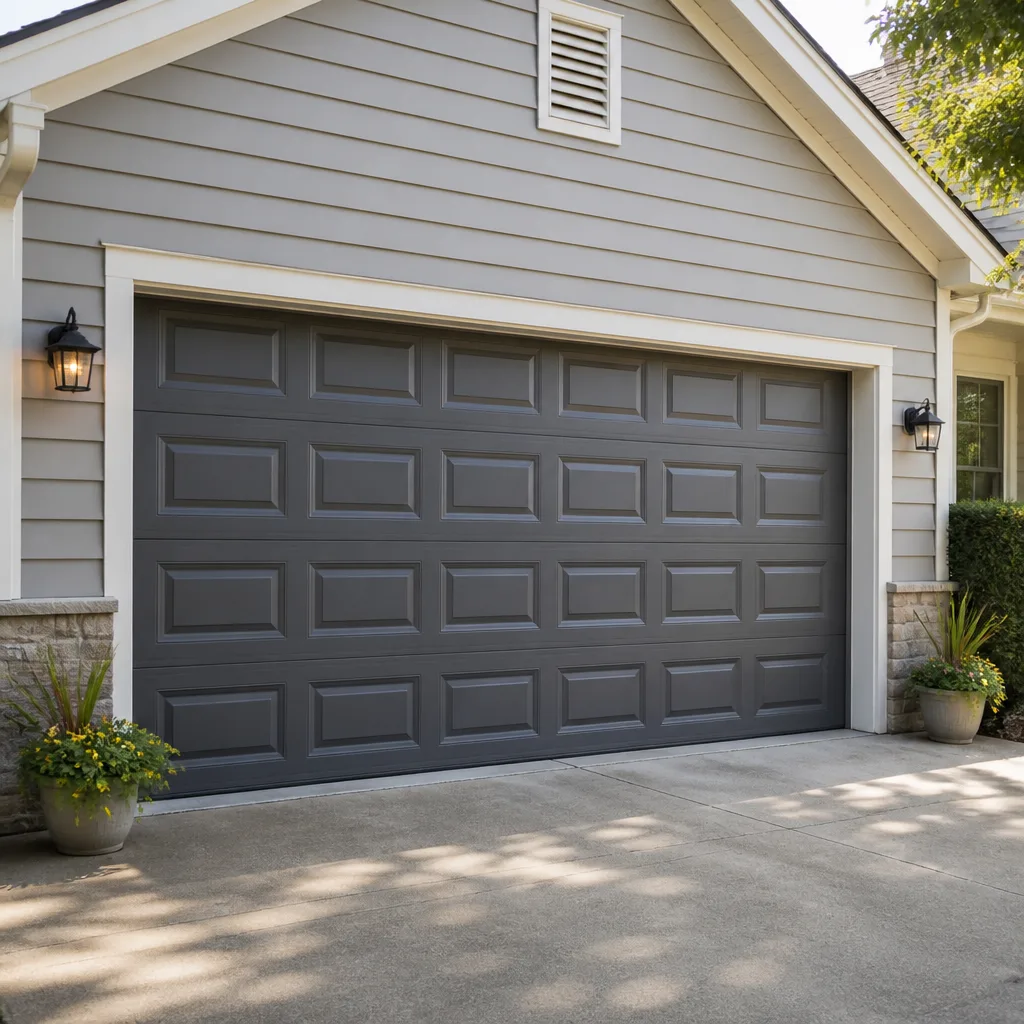 Raised-panel steel
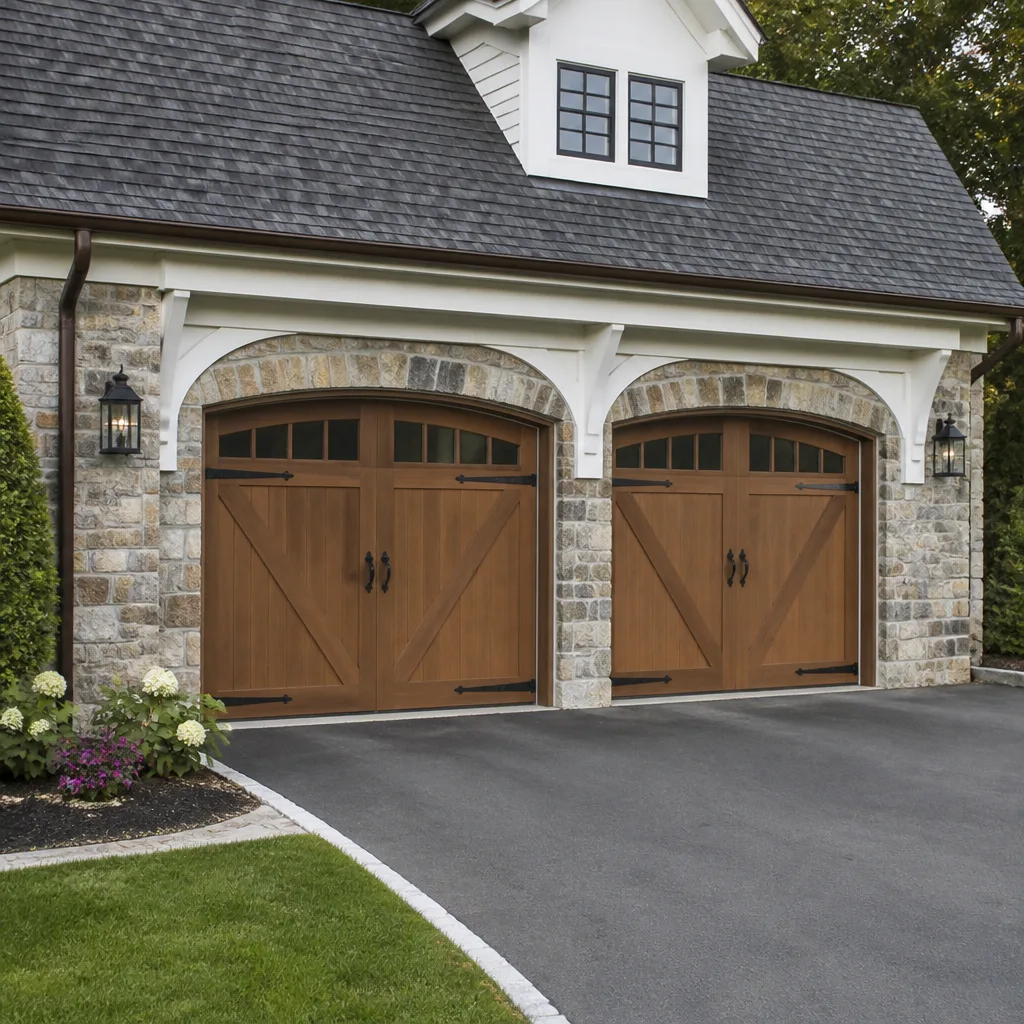 Carriage house
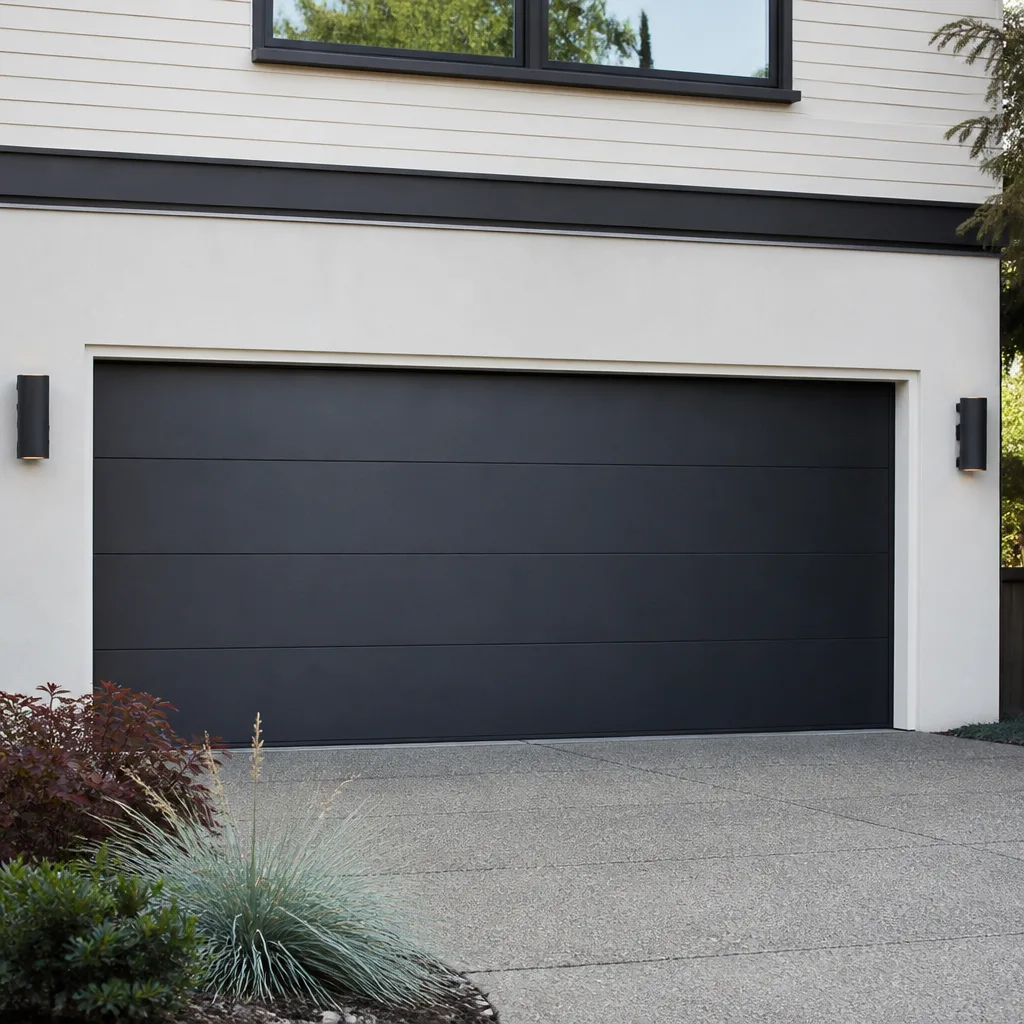 Modern flush
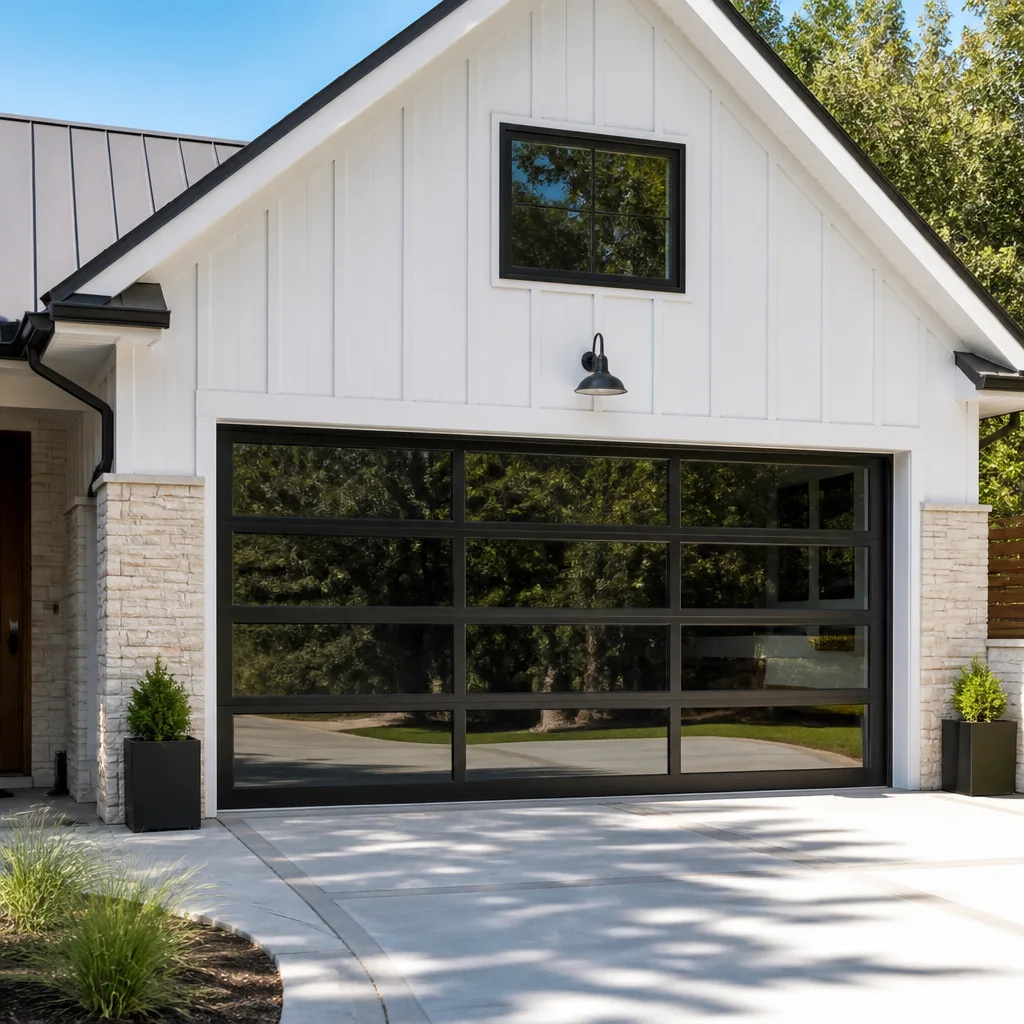 Full-view glass
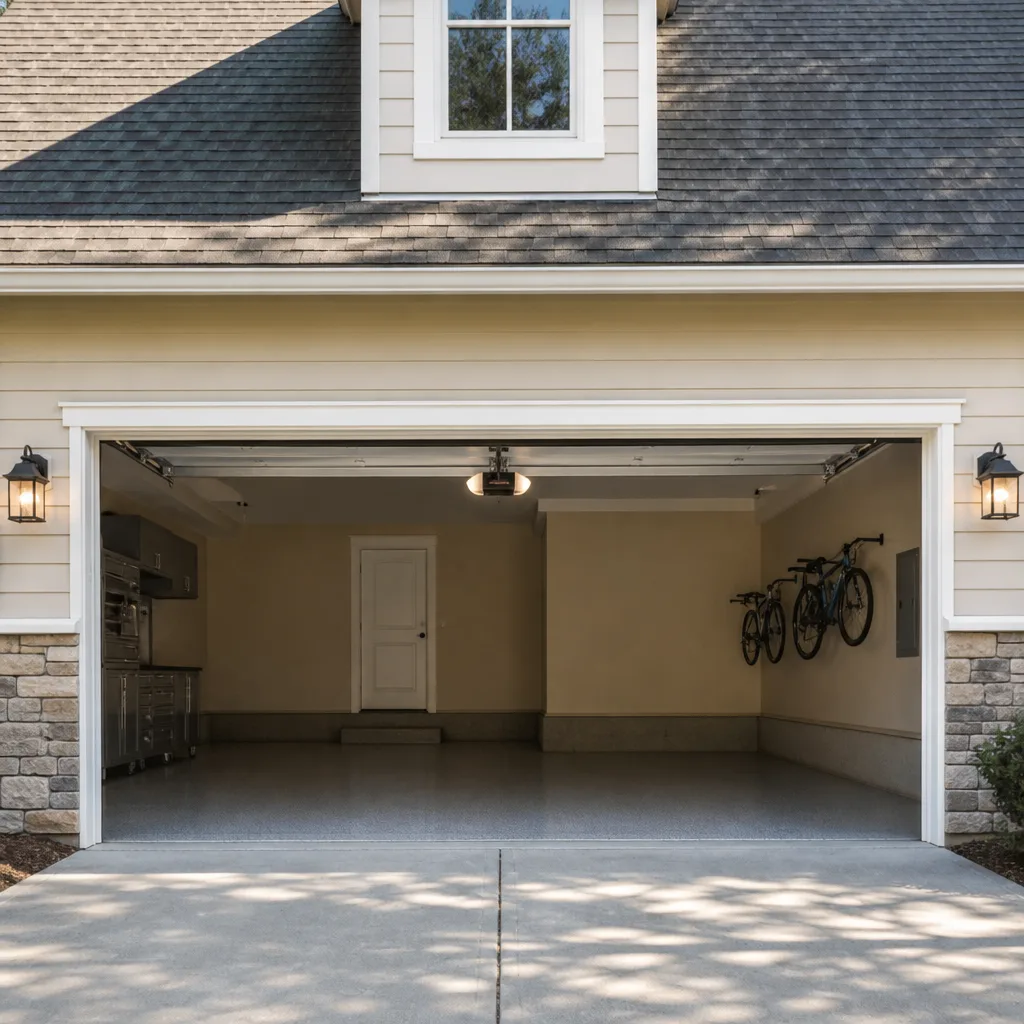 LiftMaster openers
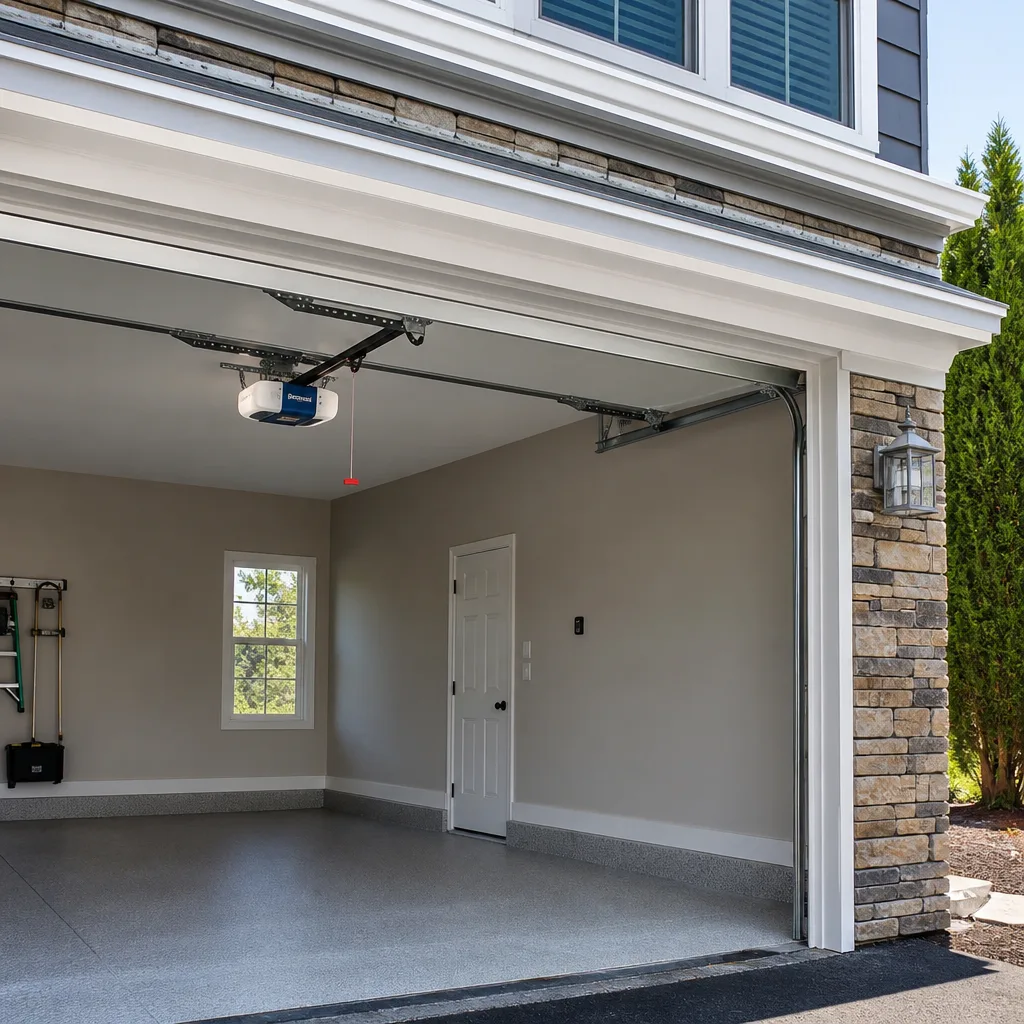 Chamberlain openers
Full 25-point door and opener safety check with every visit - springs, cables, rollers, tracks, and your LiftMaster or Chamberlain opener included
You get a price before we start. It does not change when the truck arrives.
Get your free estimateGarage Door Emergency Preparedness Guide for Grand Rapids Homes
Grand Rapids averages roughly 74 inches of snow each winter, and February nights routinely drop into the teens. That’s the exact moment a garage door spring snaps or an opener board gives out. This guide walks through what to do in the first 20 minutes after a failure, how to secure your home if the door won’t close, what Grand Rapids-specific protocols exist for power outages and ice storms, and the one emergency almost nobody prepares for: driving into the door. You’ll learn manual release steps for every major opener type, temporary security measures that won’t warp your tracks, and realistic expectations for after-hours response in Kent County.
Quick Answer
A garage door emergency in Grand Rapids means three things, in order: get the car accessible or the home secure, triage whether the problem is the door or the opener, and protect the structure from further damage until a technician arrives. Most manual-release procedures take under two minutes once you know where the red cord is, and temporary bracing can be done safely with materials already in your house. If the door is off its tracks or a spring is visibly broken, don’t operate the opener again: call a professional before someone gets hurt.
Styles & brands we work with
Table of Contents
- What Counts as a Garage Door Emergency
- The First 20 Minutes: Your Immediate Checklist
- Manual Release Procedures for Every Major Opener Type
- Securing a Door That Won’t Close
- Power Outage Protocol in Grand Rapids
- The Car Through the Door: What to Do and Not Do
- Grand Rapids Winter-Specific Failure Patterns
- Common Mistakes to Avoid
- When to Call a Professional
- Frequently Asked Questions
- The Bottom Line
What Counts as a Garage Door Emergency
Not every garage door problem is an emergency. A noisy roller or a door that hesitates for a second is a maintenance item you can check against our checklist. Here’s what constitutes a true emergency in Grand Rapids:
- Car trapped inside or outside. If the door won’t open and your only vehicle is in the garage, that’s an emergency the moment you need to leave for work, school, or a medical appointment.
- Door won’t close and won’t stay latched. An open garage is an invitation to theft and a massive heat-sink for a Michigan home in January. If overnight temperatures are below freezing, exposed plumbing in an attached garage wall can freeze within hours.
- Broken spring with the door half-open. A door with one broken torsion spring is unbalanced and dangerous. The remaining components are under unusual load, and the door can slam shut without warning.
- Door off its tracks. This is a stop-everything situation. The door is no longer supported correctly and a cable or panel could fail catastrophically.
- Opener failure during a medical or mobility situation. If a household member relies on a wheelchair, walker, or other medical device stored in the garage, a non-functional opener effectively locks them out of their own equipment.
We’ve seen all of these in neighborhoods across Grand Rapids, from Alger Heights condos to newer builds in Byron Center. The consistent thread is that homeowners wait too long to act because they’re not sure who to call or whether the problem justifies after-hours service. The problems above justify it.
The First 20 Minutes: Your Immediate Checklist
When a garage door fails suddenly, most people freeze for five minutes, then start Googling. That’s normal, but there’s a better order of operations. Here’s the sequence we recommend to every Grand Rapids homeowner.
- Stop operating the opener. If the door made a loud noise and stopped moving, every additional button press risks compounding the damage. Unplug the opener if you can reach the cord safely.
- Assess what you’re looking at. Is the door fully down, fully up, or stuck partway? Can you see a broken spring? Is a cable dangling? Take one clear photo with your phone. This single step saves technicians diagnostic time.
- Decide which problem you’re solving first. Car access or home security. These require different responses, and you can’t do both at once. If the car is trapped and you need to leave, manual release is next. If the door is stuck open and it’s below freezing, securing the opening takes priority.
- Call a professional. Sunshine Garage Door Service responds to emergency calls in Grand Rapids at (866) 491-7155. We work on LiftMaster, Chamberlain, Genie, and Craftsman openers and Clopay, Amarr, Wayne Dalton, and Raynor doors, so the technician usually arrives with the right parts on hand.
- Clear the area. Move kids, pets, bikes, and anything valuable away from the door. If a spring is partially failed, the door may move suddenly without any input from you.
This checklist works for any garage door emergency. It doesn’t matter whether you have a 1990s steel door or a modern insulated one: the logic of safety, assessment, and action stays the same.
Manual Release Procedures for Every Major Opener Type
Every garage door opener has a manual release mechanism, usually a red cord hanging from the trolley or rail. Pulling it disconnects the door from the drive mechanism so you can lift the door by hand. The exact procedure varies by opener brand and era, so here’s what to know for the systems most common in Grand Rapids homes.
LiftMaster and Chamberlain (incl. belt and chain drive)
- Unplug the opener or turn off the circuit breaker for the garage. You don’t want the opener cycling unexpectedly while you’re working.
- Locate the red emergency release cord. It hangs from the trolley carriage near the front of the garage, roughly above the parked car.
- Pull the cord down and toward the garage door. You’ll hear a clunk as the carriage disengages.
- Lift the door manually. It should move smoothly. If it’s unbelievably heavy or stops partway, a spring is broken and the door is unsafe to force. Stop immediately.
For LiftMaster models with a battery backup, the release mechanism functions the same way even during a power outage. The battery backup only powers the lights and safety sensors on some models, so manual operation may still be required if the door is heavy.
Genie openers
Genie uses a red release lever rather than a cord on some models, especially screw-drive units from the early 2000s that are common in West Michigan garages. If you don’t see a hanging cord, look at the trolley itself: the lever is a small red tab you pull straight down. The rest of the sequence is identical. On newer Genie units with wall consoles, look for a small release button on the console that disengages the door electronically before you pull the manual lever.
Craftsman openers
Most Craftsman openers are clones of Chamberlain mechanisms, so the red cord procedure above applies. The common mistake is pulling the cord sideways instead of down-and-toward-the-door. If the cord doesn’t release the trolley, check whether the opener is latched via a manual lock on the rail: some older Craftsman units had a sliding metal tab that had to be moved first.
When the red cord is unreachable or broken
If the cord is missing, snapped, or the opener trolley is stuck in the open position and you can’t reach it, you have limited options:
- Use a stepladder. The cord often ends above the door itself. A 6-foot stepladder gives you the reach you need. Never climb on the car or a box.
- If the cord is broken at the mechanism, you can sometimes reach the release lever directly with a broom handle. Don’t improvise with wire or string to yank it: a sudden release under tension can whip back.
- If the door is stuck closed and the release won’t engage, this usually means the spring has broken and the door’s full weight is resting on the trolley. Forcing the release can cause the door to drop. This is a professional-only situation, and in Grand Rapids it’s one of the more common winter emergencies on single-spring doors ten years or older.
Securing a Door That Won’t Close
An open garage in Grand Rapids isn’t just an inconvenience, it’s a security and heating problem. If your door is stuck open and a technician can’t reach you for a few hours, you need to secure the opening without doing anything that will bend tracks, scratch panels, or create a hazard.
What you can safely do:
- Drop a sturdy object in view of the opening that blocks vehicle access. A couple of large trash bins or a ladder laid across the entry sends a clear signal and slows down anyone trying to walk or drive in.
- Close the interior garage-entry door and lock it. This is your primary security boundary. If your home has an attached garage, treat the garage interior as compromised until the exterior door is fixed.
- Unplug the opener. If a wall button or remote is stuck or glitching, the motor can trigger at random. Eliminate that possibility.
- Cover the opening with a heavy tarp stapled or weighted at the base to reduce heat loss and keep snow from blowing in. Don’t nail or screw anything into the door itself: you’ll drill through a panel or a seal and create a bigger repair bill.
What you should not do:
- Don’t attempt to wrestle the door down by hand if it’s stuck partway. A visibly bent track or a canted panel means the door is jammed under tension. Manhandling it can spring a cable free.
- Don’t wedge two-by-fours under the door as a prop. If the spring is failing, the door can fall on the prop and turn it into a missile.
- Don’t leave the garage empty and unlit at night if you can avoid it. A motion light aimed at the driveway is a cheap deterrent while you wait for service.
In Grand Rapids, after-hours response windows can stretch during a lake-effect snow event because roads slow everyone down. If you’re in a situation where a door is wide open at 11 p.m. with single-digit temperatures, securing the interior door and killing power to the opener is non-negotiable, and calling for emergency service before morning is the right move. Sunshine Garage Door Service offers free estimates and will quote the repair price before any work starts, so you’re never surprised by a bill in the middle of the night.
Power Outage Protocol in Grand Rapids
West Michigan loses power regularly: ice storms, thunderstorms, and lake-effect wind events all take their turn. When the grid goes down, your garage door opener goes down with it, unless you have a battery backup. Here’s how to think about outages before they happen and what to do during one.
Before the next outage: assess your backup situation
Many modern openers, including current-model LiftMaster and Chamberlain units, have factory battery backups that last 24 to 72 hours and run the door through roughly 20 to 50 open/close cycles, depending on temperature. If you don’t know whether your opener has a backup, look for a small battery icon on the wall console or a model number that starts with a “B” in the LiftMaster line. If your Genie or Craftsman opener is older than about eight years, it probably has no backup at all.
If a battery backup is not installed, your options during a Grand Rapids outage are: open the door manually with the release cord, wait for power to return, or upgrade. Given that the city regularly sees outages that last more than a day in rural and semi-rural parts of Kent County, we recommend checking your opener’s backup status every fall, before the first freeze. The cost of a backup-ready opener or an external backup unit is far lower than the cost of a missed day of work or a frozen pipe.
During an outage
- Confirm the outage scope. If your neighbors have lights, the problem is likely your breaker, not the grid.
- Use the manual release to open the door if you need to drive. You can leave the door open while the power is down if security isn’t a concern in your neighborhood, but close it afterward with the same manual action.
- If your backup unit isn’t lifting the door, check that the door is balanced. Backup systems run at lower torque than wall power, and a door with a degraded spring may not lift under battery voltage. This is a door problem masquerading as an opener problem.
- If you’re on a medical device circuit, prioritize opener repair and backup installation before storm season. A garage you can’t open is a mobility barrier, not a convenience issue.
See the difference
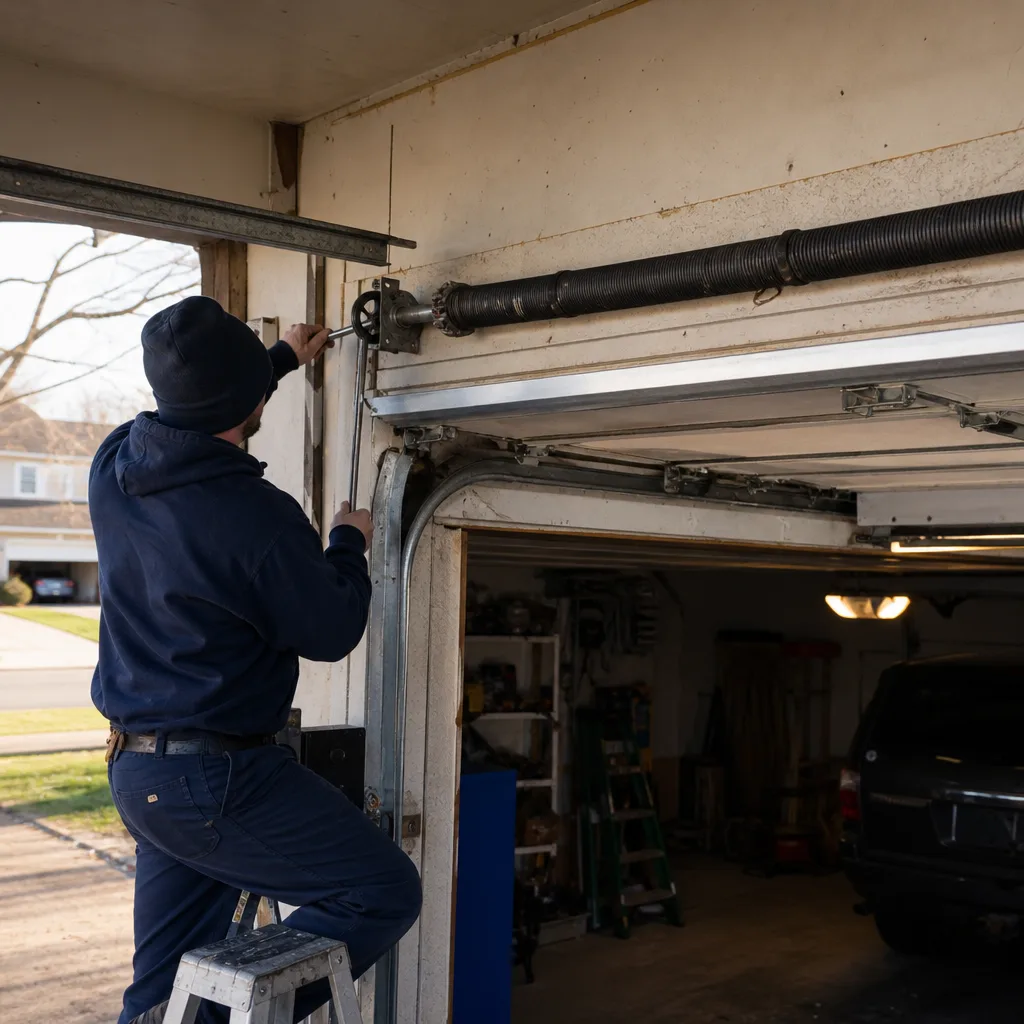 Before
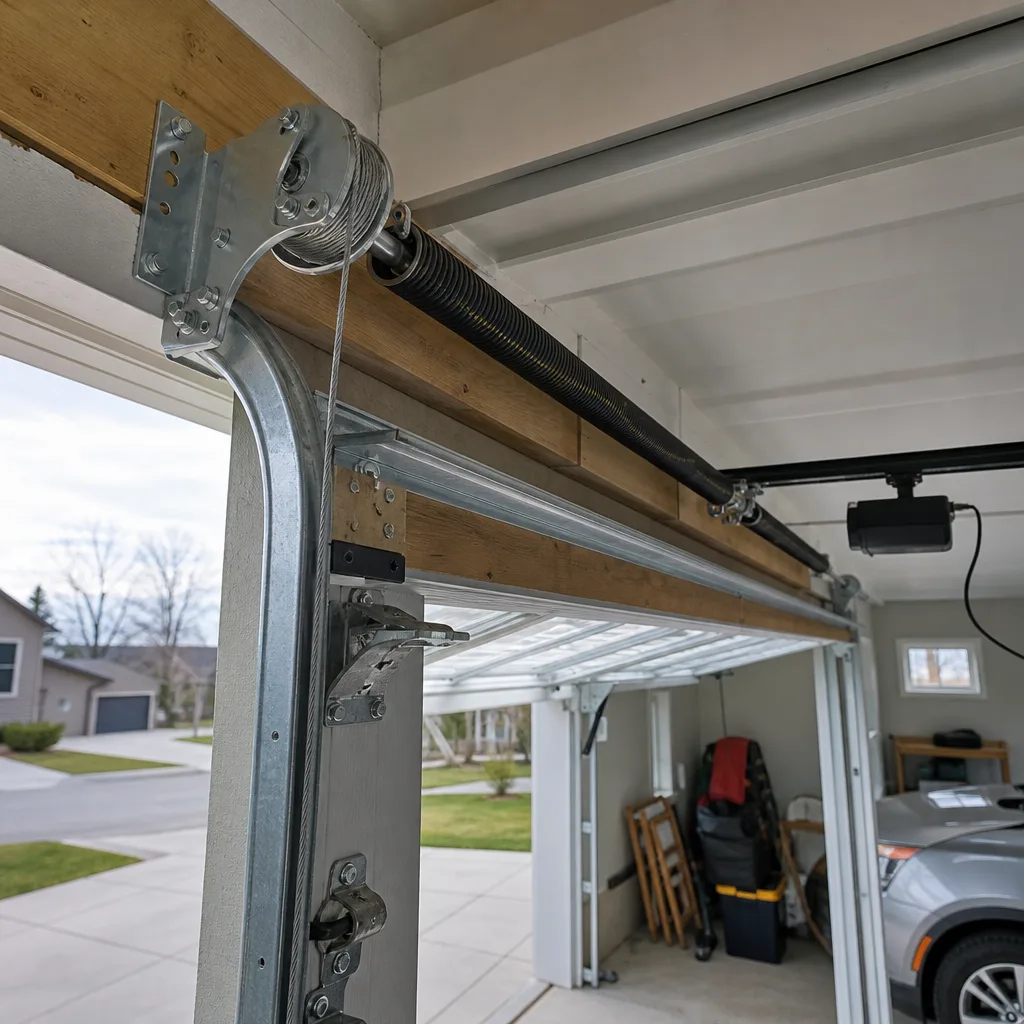 After
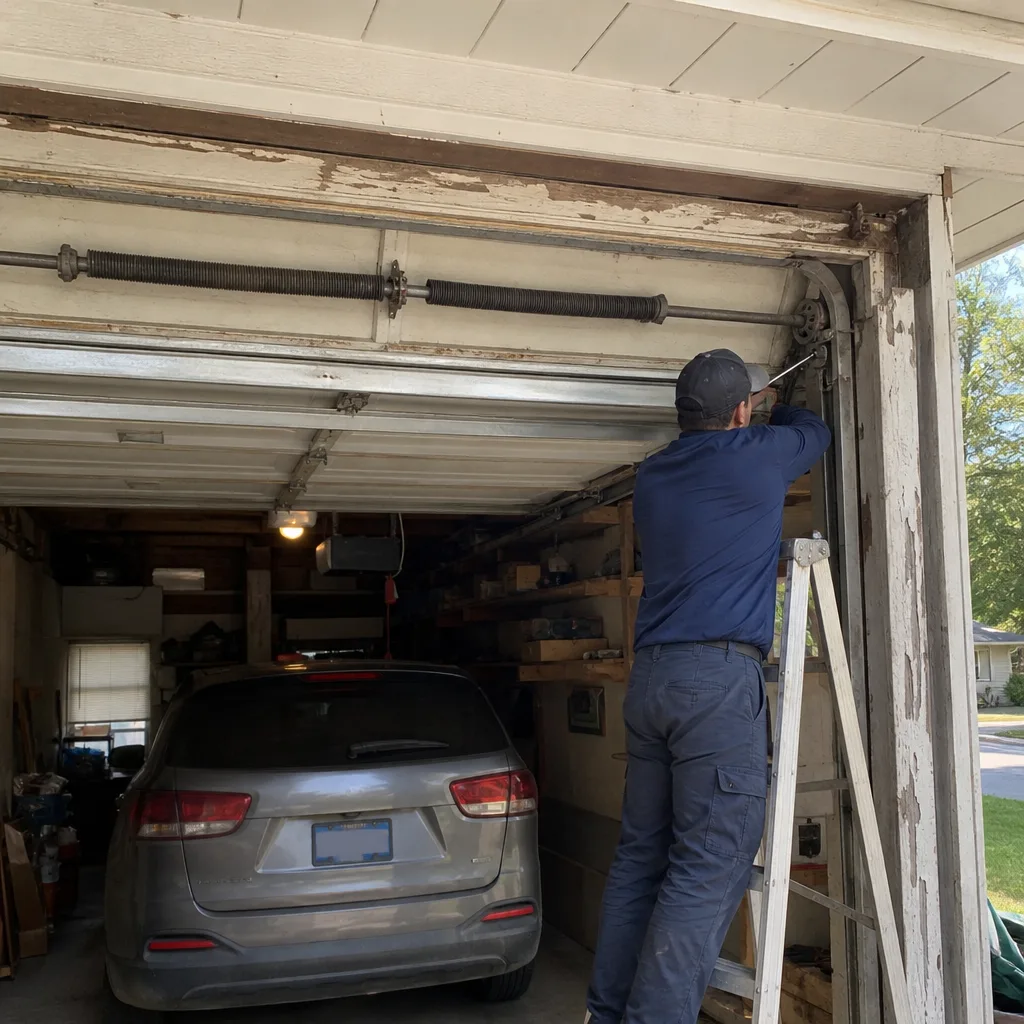 Before
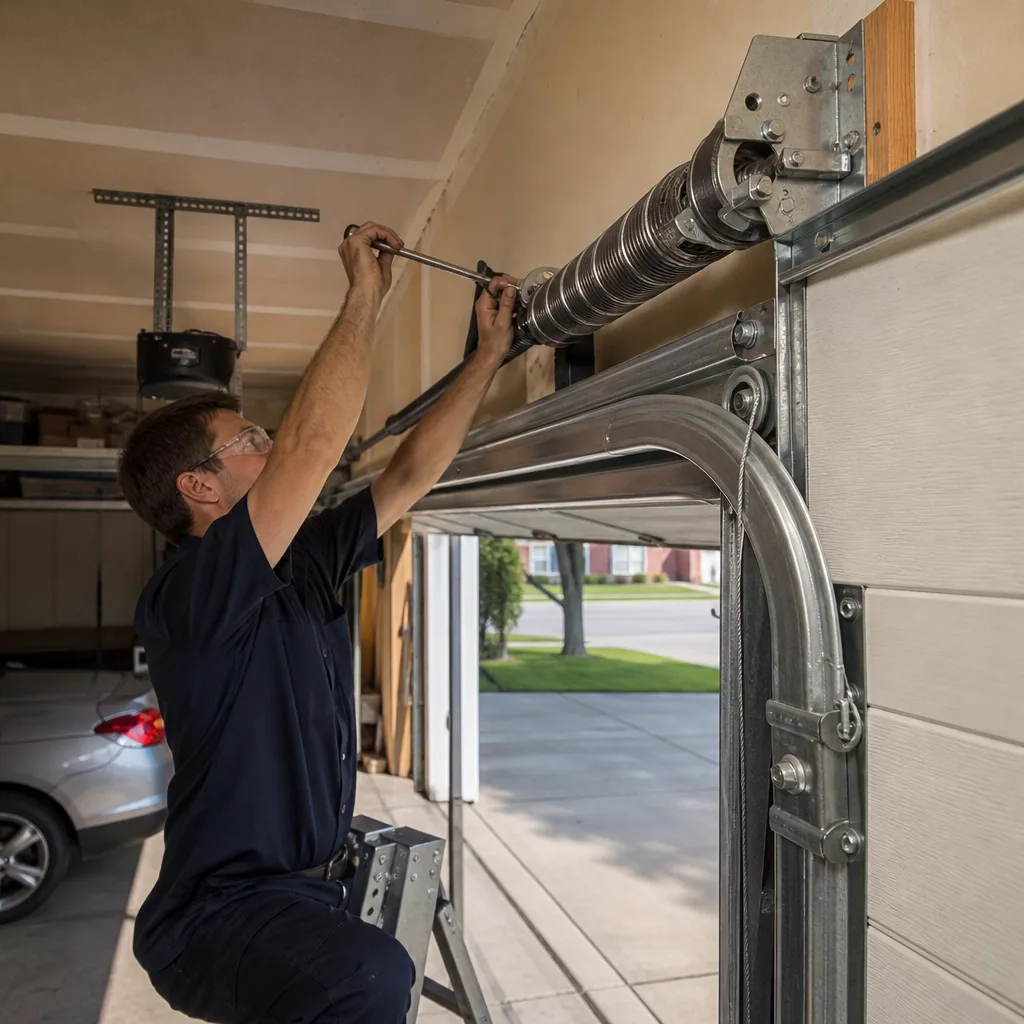 After
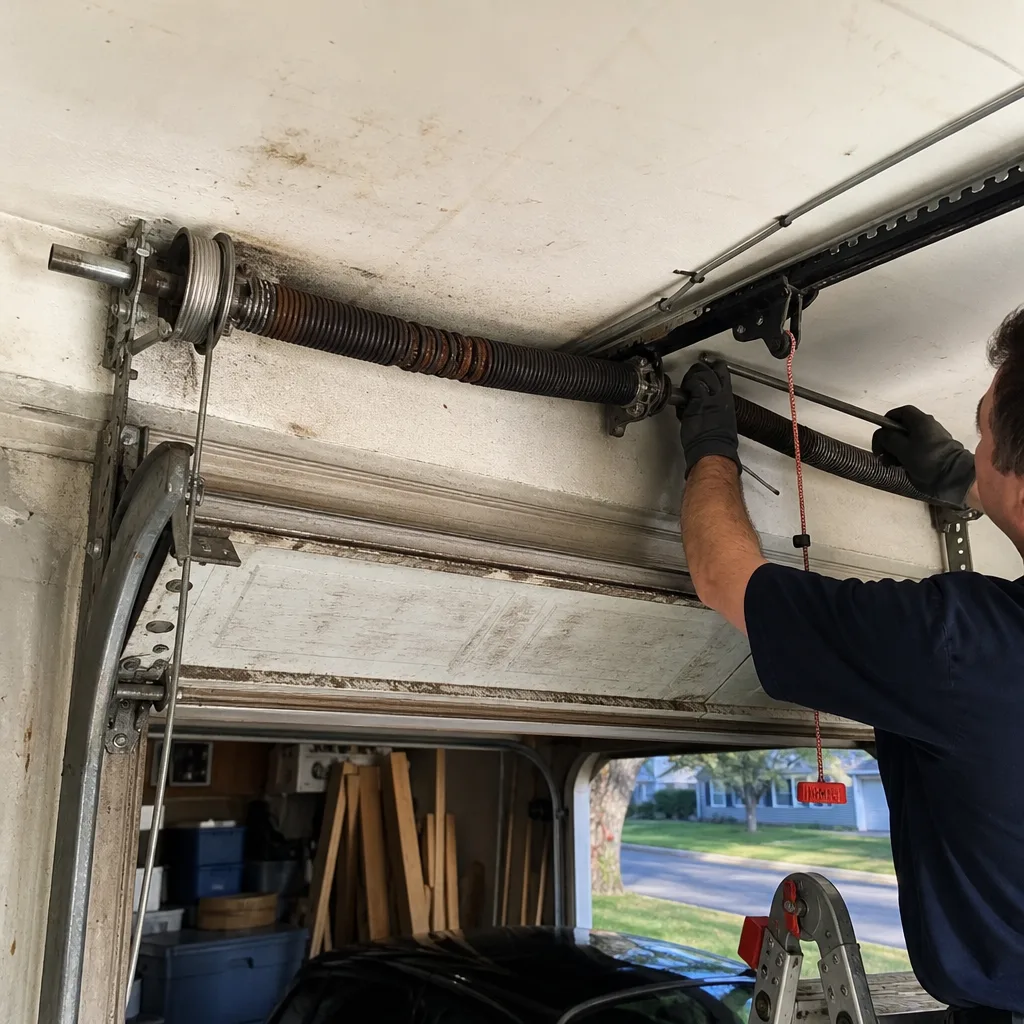 Before
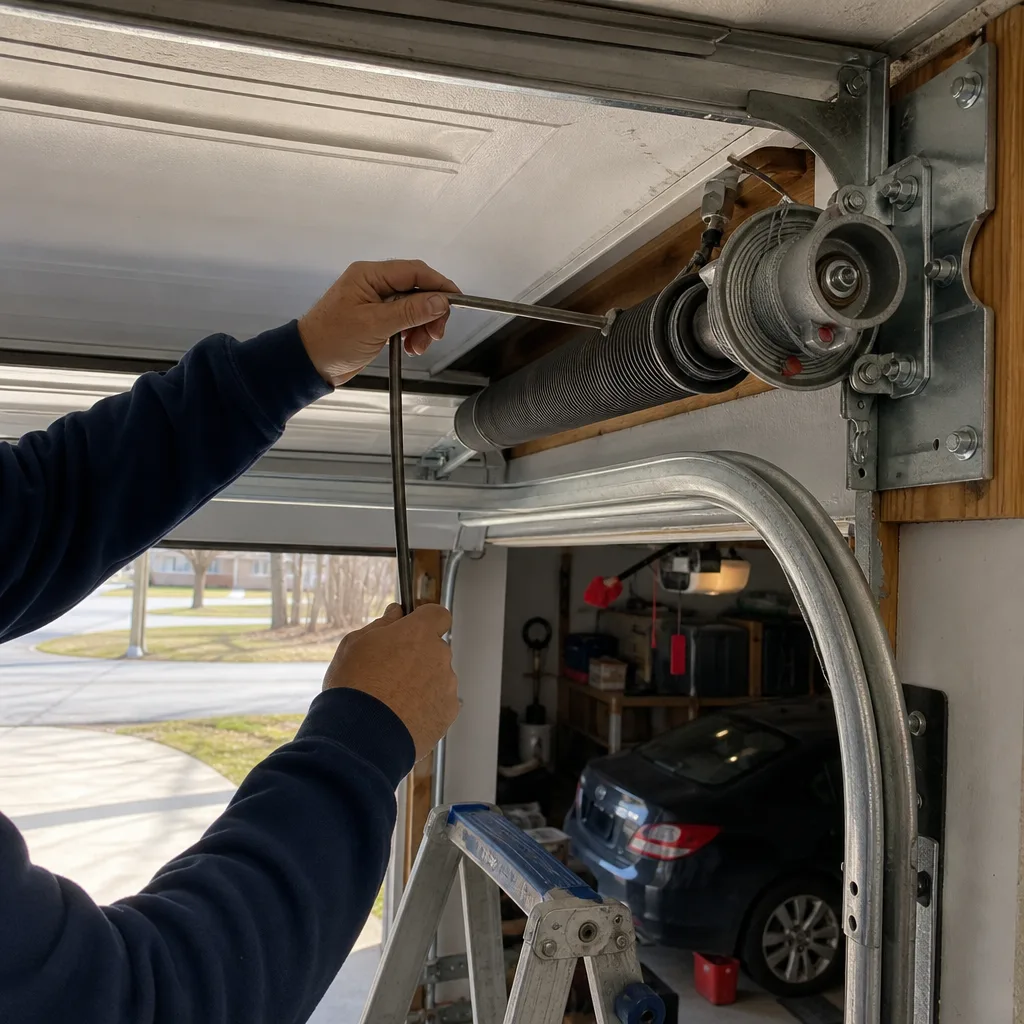 After
The Car Through the Door: What to Do and Not Do
Every garage door company in Grand Rapids has fixed doors hit by cars. It’s usually operator error: a foot slipping off the brake, a misjudged turn into a narrow driveway, a car left in gear. The panic is immense, but the physics are predictable. Here’s what to do in the first minutes after impact.
What to check first:
- Is anyone injured? Check yourself and passengers. Then check anyone who may have been in or near the garage.
- Is the structure compromised? Look at the header above the door opening for cracks or displacement. In many Grand Rapids homes, the garage door is on a load-bearing wall. If the header moved, don’t re-enter the garage until a builder or structural engineer looks at it.
- Is the door hanging or resting on the car? If panels are dislodged and resting on the vehicle, don’t sit in the car or reach under the door. A sprung torsion system can still be under tension.
What not to do:
- Don’t press the opener button to “pull the door off the car.” The opener will strain against the wreckage and either strip the gear, snap the chain or belt, or pull the track out of the wall.
- Don’t try to push the door back into place with the car. Drive the car only if it’s clear of the door and moving it won’t cause debris to fall.
- Don’t assume the door is totaled. Steel and aluminum panels can often be replaced individually, even when the door looks destroyed. Track and spring replacement is frequently cheaper than a full door replacement, but you won’t know until a technician assesses the rails, the trolley, and the opener.
When a car hits a door, you need two evaluations: one for the door and opener, another for the structure. The door assessment is a job for a company that works on the specific door and opener brands you own. For example, we regularly repair impact damage on Raynor and Clopay doors in Grand Rapids and rebuild LiftMaster and Chamberlain rail systems after a car strike. The structural assessment is a separate conversation, and any responsible garage door company will tell you when to pull in a builder before touching the door.
Grand Rapids Winter-Specific Failure Patterns
Grand Rapids garages fail in predictable ways because the climate stresses specific components. Here’s what we see year after year in this market.
Spring failures spike in January and February
Torsion springs are rated for a certain number of cycles, usually 10,000 for a standard spring. Cold temperatures lower the steel’s flexibility and make a fatigued spring more likely to break. In our experience, Grand Rapids sees a spike in broken spring calls every January and February, especially on doors that are used four to six times a day. If your spring breaks in cold weather, the door won’t operate manually or automatically: the full weight of a 150- to 300-pound door has no counterbalance.
Ice damming in the track
When snow melts off the car during the day and refreezes at night, water can run to the base of the tracks and freeze. The door can become stuck against the ice. The fix is usually simple: chip the ice out, dry the track, and confirm the door isn’t frozen to the floor. Don’t use hot water to melt the ice, because you’ll create more of it the next night. Use a rubber mallet to break up the ice and wipe everything dry.
The “frozen door to the floor” issue
The bottom seal of a garage door can freeze directly to the concrete apron. When you hit the opener button, the opener strains against the bond and can strip a gear or snap a belt. If your door has been sitting closed through a sub-zero night followed by a thaw-freeze cycle, check the bottom edge for ice before opening. A quick kick at the bottom corners will often tell you if it’s frozen down.
Condensation and electronics
Grand Rapids garages that are heated go through dramatic temperature swings, and condensation forms on the ceiling, inside the opener housing, and on sensor lenses. This is one of the most common reasons a garage door opener fails or behaves erratically in this city. If you keep your garage heated above roughly 50 degrees and the outdoor temperature is zero, you’ve created a 50-degree temperature gradient that condenses moisture everywhere. The fix is insulation and ventilation, but opener repairs after condensation damage are a large share of our winter work in the Grand Rapids area.
Common Mistakes to Avoid
- Repeatedly pressing the opener button after a failure. Every button press on a jammed door sends full motor torque into the problem. You can turn a broken spring into a broken opener gear in about ten presses. When the door doesn’t respond normally, stop and investigate.
- Spraying lubricant on a broken spring. Lubricant won’t bring a broken spring back to life, and it makes the remaining spring slippery and harder to work with. A proper spring replacement requires a new part at a specified weight rating.
- Ignoring a door that’s hard to lift manually. If opening the door by hand feels like lifting weights, the springs are failing. A door with a working spring should open with a few pounds of force. A hard-to-lift door is a warning sign that a spring is about to break.
- Replacing one spring on a two-spring system. If you have a two-spring door and one breaks, the other spring has the same number of cycles on it. Replacing only the broken spring means a second repair in a few months, plus another service call in a Grand Rapids winter.
- Not testing your backup battery. A battery backup that isn’t tested is a battery backup that may not work when the power goes out. Test yours quarterly: disconnect the opener from wall power and run the door. Two minutes, four times a year.
- Saving the old opener remote after installing a new one. If you replace an opener, the old remote codes are still stored in the new unit’s factory settings. A home in Eastown or Creston with an unsecured opener is a simple theft target. Clear all codes and reprogram fresh.
When to Call a Professional
Some garage door problems are fixed with a release cord pull and a call to a friend who can hold a flashlight. Others are genuinely dangerous, and the line between the two is not always obvious. Here’s our rule of thumb: if the problem involves a spring, a cable, a track, or an opener motor that behaves erratically, leave it alone and call. A spring under tension can release with enough force to break bones or worse, and cables can whip when they snap. In Grand Rapids, Sunshine Garage Door Service offers free estimates and will tell you upfront whether the problem is a repair or a replacement decision. Call (866) 491-7155 and a technician will walk you through the first steps over the phone, then head your way. If you’re in Kentwood or the surrounding area, you can learn more about our garage door repair in Kentwood or our dedicated garage door opener repair in Kentwood services.
Frequently Asked Questions
Most after-hours emergency repairs in the Grand Rapids market run between $150 and $350 for a spring replacement, plus an after-hours dispatch fee that varies by company and time of night. Opener failures typically fall in the $200 to $500 range depending on the part. The price is always quoted and agreed before work starts, so you know the number before anyone picks up a wrench. Call (866) 491-7155 for an exact quote for your specific door.
Yes. Same-day and emergency dispatch is available in Grand Rapids and throughout Kent County, including nights and weekends. Winter weather can extend drive times, but we schedule our day around emergency calls during storm events because that’s when door failures spike. If you need urgent service, the fastest way to get on the schedule is to call (866) 491-7155 and describe what you’re seeing.
No. The price we quote before starting work is the price you pay. If the technician finds a second problem while working, we stop and discuss it before any additional repair begins. You’re never billed for a surprise.
For the common failures like springs, cables, rollers, sensors, and opener gears on LiftMaster, Chamberlain, Genie, Craftsman, Clopay, Amarr, Wayne Dalton, and Raynor systems, yes. Our trucks are stocked for the brands we service, which is why we can usually fix the problem in one visit instead of scheduling a follow-up for parts.
No. A door stuck partway is usually jammed against a broken component or a bent track, and driving under it risks the door falling on your car. The clearance is deceptive, and a door that’s unstable is unpredictable. Call for a repair before attempting to move the vehicle.
New door installations are measured and ordered, so same-day installation is typically not available unless the door is in stock locally and the opening is a standard size. Our garage door installation service in Kentwood covers all standard and custom openings, and we’ll provide a free measurement and written price before any work begins. To learn more about our new door options, see our Garage Door Installation in Kentwood page or start with our Sunshine Garage Door Service home overview. For doors that need repair rather than replacement, see Garage Door Repair in Kentwood and for opener issues specifically, Garage Door Opener Repair in Kentwood.
The Bottom Line
Grand Rapids homeowners face garage door emergencies in a specific set of conditions: deep freeze spring failures, ice-frozen doors, condensation-crippled openers, and the occasional car through the panel. The homeowners who handle these situations best are the ones who know the manual release procedure for their opener, have a battery backup or a plan for power outages, and keep the phone number of a brand-specific technician handy before the first lake-effect storm of the season. At Sunshine Garage Door Service, we work on the door and opener brands already installed in Grand Rapids garages, from LiftMaster and Chamberlain drive systems to Clopay and Raynor doors. When an emergency hits, call (866) 491-7155 and we’ll get your door moving again. For more guides & resources, visit our blog. Written by the team at Sunshine Garage Door Service, serving Grand Rapids since 2013.